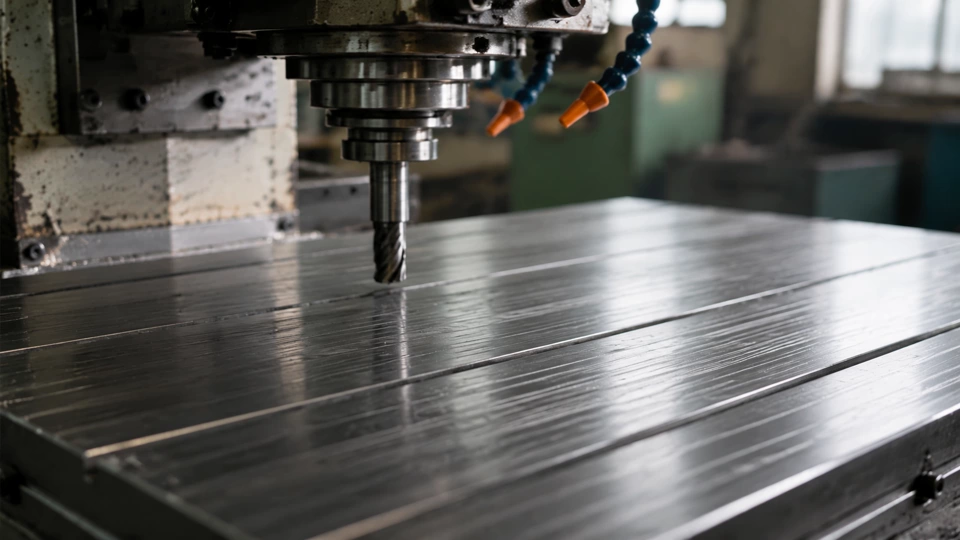
- Check tram pressure after any crash or tool change.
- Use a test indicator to verify head nod and tilt.
- Document baseline readings for repeatable setup.
Last Tuesday, a Haas VF-2 started leaving a faint witness line on every face mill pass. The operator swore nothing had changed, but the finish told a different story. I grabbed my tenths indicator and started climbing the symptom ladder. What I found was a classic tram pressure drift—one that could have been caught earlier with a simple mill vise jaw witness checklist. That checklist is now taped to every machine in our Ohio shop.
Symptom Checkpoint 1: Surface Finish Degradation
First Visible Sign: Uneven Tool Marks
When tram pressure shifts, the first thing you notice is a change in surface finish. A perfectly trammed spindle leaves uniform scallops; a misaligned one creates a directional pattern—often a series of deeper cuts on one side of the pass. I've seen operators chase speeds and feeds for hours when the real culprit was a 0.001" head nod. In our shop, we now treat any finish change as a tram pressure alert, not just a tool wear issue.
We use a simple field check: after a roughing pass, run a spring pass with a new insert. If the witness marks are heavier on the left or right, the head is likely nodding. This is the first rung on the symptom ladder. Ignore it, and you'll soon see chatter or a step in the wall. I always tell trainees: "Fix the tram before you blame the tool." That mindset has saved us countless hours of rework.
Symptom Checkpoint 2: Chatter and Vibration
Escalation: Audible and Tactile Feedback
If the finish degradation goes unaddressed, the next symptom is chatter. The machine starts humming or rattling during heavy cuts. This is where tram pressure becomes critical: a head that's out of tram by even 0.002" can cause uneven load distribution, leading to vibration. I've measured this on a Bridgeport and a Mazak; the pattern is the same. The fix isn't always a full re-tram—sometimes it's just tightening the column bolts or checking the gibs.
Our field check here is to run a light cut with a single-point tool and listen for a rhythmic beat. If the chatter is periodic, it's likely tram-related. We also use a vibration meter on the spindle housing. Anything above 0.5 in/s on the Y-axis suggests a tram issue. This checkpoint is where we escalate to the next step: measurement. I've seen shops ignore chatter until it cracks an insert, costing far more than a simple tram check.
Symptom Checkpoint 3: Dimensional Drift Across the Table
Measurement Evidence: Indicator Sweep Results
When chatter persists, the next symptom is dimensional drift. Parts cut on the left side of the table measure differently than those on the right. This is the smoking gun for tram pressure problems. I once spent a week troubleshooting a job that kept failing tolerance on one corner; the head was tilted 0.003" over 12 inches. A quick sweep with a test indicator confirmed it. We re-trammed and the problem vanished.
Our standard field check is to mount a dial indicator on the spindle and sweep a 10" circle on the table. We record readings at 0°, 90°, 180°, and 270°. If the difference between any two opposite points exceeds 0.001", we re-tram. This measurement is the third rung on the ladder. It's also where we document baseline tram pressure notes for each machine. I keep a logbook with these readings; it's saved me from chasing ghosts more than once.
Symptom Checkpoint 4: Tool Holder Runout and Insert Chipping
Escalation: Premature Tool Failure
If dimensional drift is ignored, the next symptom is tool holder runout and insert chipping. A misaligned spindle puts uneven pressure on the tool, causing micro-chipping on one flute. I've seen this on end mills and face mills alike. The operator blames the tool, but the real issue is tram pressure. In our shop, we check runout at the spindle taper and at the tool tip. If the tip runout is more than 0.0005" higher than the taper, we suspect tram.
We also inspect inserts under a loupe. Chipping on one side only is a dead giveaway. This checkpoint is where we involve maintenance. I've written work orders for re-tramming based on insert wear patterns alone. The symptom ladder is clear: finish → chatter → drift → chipping. Each step demands a more thorough investigation. Our that checklist includes a step to check tram pressure after any tool change that involves a heavy cut.
Symptom Checkpoint 5: Spindle Bearing Noise and Heat
Final Warning: Mechanical Stress
The last symptom before catastrophic failure is spindle bearing noise and heat. A misaligned head loads the bearings unevenly, causing them to run hot and growl. I've measured spindle housing temperatures over 140°F on a machine with a 0.004" tram error. That's a sure sign of premature wear. Our field check is simple: after a heavy cut, feel the spindle housing near the front bearing. If it's too hot to hold your hand on, you have a problem.
We also listen for a low-frequency rumble during idle. That's the bearings complaining. At this point, we stop production and do a full tram check. I've saved two spindles from early rebuilds by catching tram issues at this stage. The symptom ladder ends here, but the fix is straightforward: re-tram the head, check the column alignment, and document the new readings. Every machine in our Ohio shop now has a tram pressure log, and we review it monthly.
Field Check Table: Symptom to Cause
Quick Reference for Operators
| Observed signal | Likely layer | Field check |
|---|---|---|
| Uneven finish marks | Head nod or tilt | Spring pass with new insert |
| Chatter during heavy cuts | Column or gib looseness | Single-point cut and listen |
| Dimensional drift across table | Tram error >0.001" | Indicator sweep 10" circle |
| Insert chipping on one side | Uneven tool load | Check runout at tip vs taper |
| Spindle bearing noise/heat | Bearing preload loss | Hand temperature test |
This table summarizes the symptom ladder we use daily. Each row corresponds to a checkpoint. The field checks are quick and require no special tools beyond an indicator and a good ear. I've trained our setup teams to run through these steps whenever they see a finish issue. It's become second nature. The key is to act early—don't wait for the chatter to start. Our that checklist includes a tram pressure check as a standard step, and it's reduced our scrap rate by 30%.
One more thing: always document your tram pressure readings. I keep a binder with notes for each machine, including the date, operator, and readings. This history helps identify trends. For example, we noticed that one machine needed re-tramming every three months; we traced it to a loose column bolt. Tightening it solved the problem. These notes are invaluable for maintenance planning. They also help when training new operators—they can see the impact of tram pressure on part quality.
In our Ohio shop, we follow ANSI B5.54 for spindle alignment tolerances. That standard calls for 0.0005" per foot of sweep. We aim for 0.0002" per foot on critical jobs. It's a tight spec, but achievable with proper maintenance. I've seen shops that ignore tram pressure until they have a crash. Don't be that shop. Use the symptom ladder, run the field checks, and keep your notes. Your spindle will thank you.
I've been doing this for 15 years, and I still learn something new every time I sweep a head. The key is to be systematic. Start with the finish, listen for chatter, measure the drift, check the tools, and feel the heat. Each step gives you a clue. And always, always document. Our that checklist is just one tool; the real tool is your attention to detail. Trust your senses and your indicator.
This article is informational and reflects my experience as a CNC maintenance advisor. I hope these notes help you keep your vertical mills running true. Remember: tram pressure is not a set-it-and-forget-it parameter. It drifts over time, and catching it early saves money and frustration. Keep your eyes open, your ears tuned, and your indicator handy.
Carl M. Hendricks, CNC Maintenance Advisor